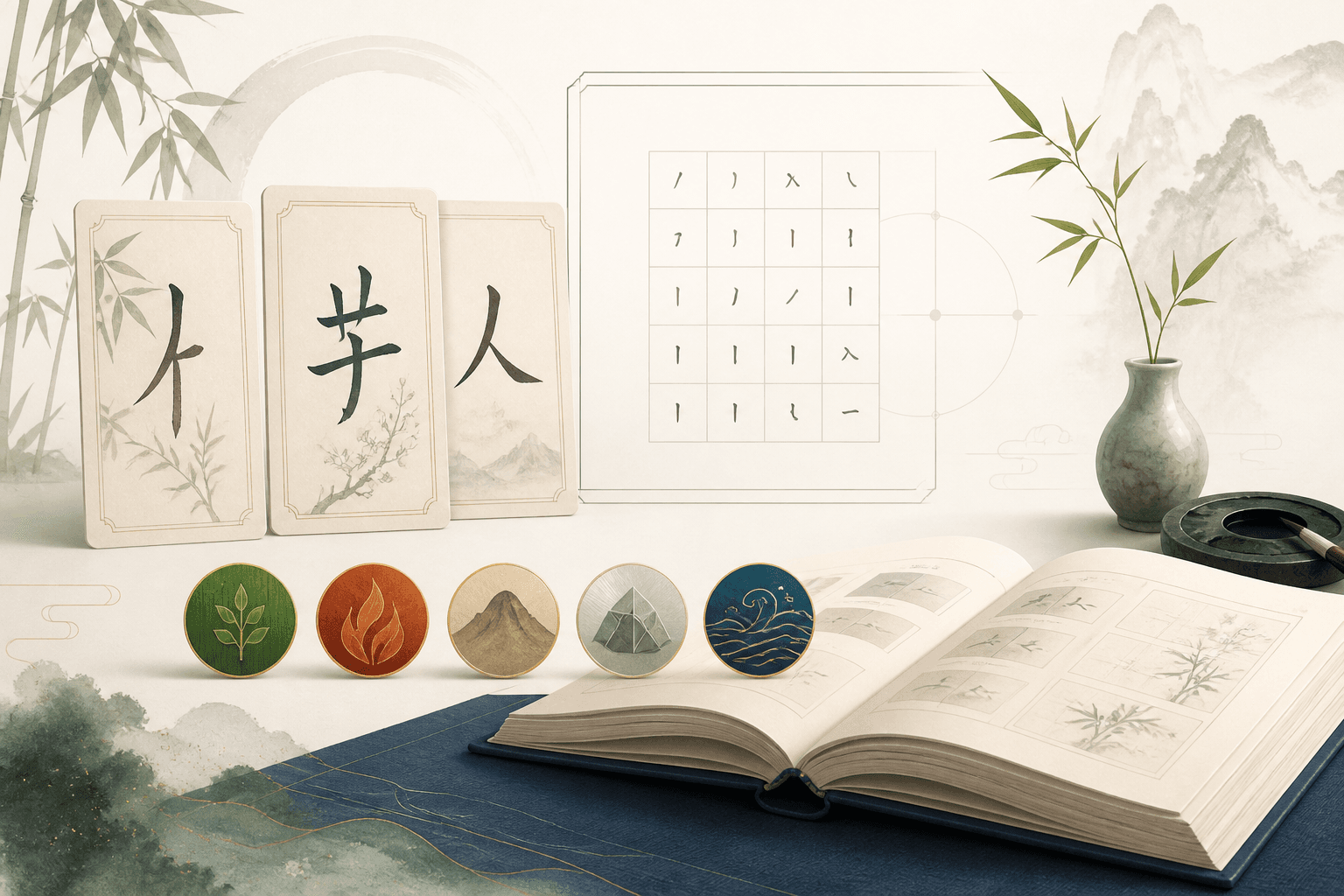
Name fortune telling is a folk practice that interprets personality, fortune, relationships, and other themes through Chinese characters, stroke counts, Five Elements associations, pronunciation, meaning, and traditional rules.
Common forms include name tests, scoring, Five-Grid analysis, and name-element analysis. It is not part of Bazi chart calculation, and there is no single standard shared by every school, so the same name may receive different results.
What Does Name Fortune Telling Usually Analyze?
Different systems focus on different aspects. Some websites use only the name, while others request birth date and time and combine the name with the Five Elements of a Bazi chart. Before using a service, identify which system it follows.
- Name stroke counts
- Heaven, Personality, Earth, Outer, and Total Grids
- Character elements, meanings, and pronunciation
- Relationship between a name and Bazi
What Is Five-Grid Name Analysis?
The Five Grids are the Heaven, Personality, Earth, Outer, and Total Grids. They use formulas based on surname and given-name stroke counts and map the resulting numbers to traditional interpretations. The Personality Grid commonly combines selected surname and given-name characters, while the Total Grid generally uses all characters.
Numbers may be assigned auspicious or inauspicious meanings related to personality, career, or family, but Five-Grid analysis is only one naming method and does not represent all traditional naming culture.
Why Can the Same Name Have Different Stroke Counts?
Some systems use modern Simplified Chinese stroke counts, while others use Traditional forms or the Kangxi Dictionary. A converted character may have a different count, so two sites can produce different grids and scores for the same name without either necessarily making a calculation error.
What Are the Five Elements of a Name?
Some systems assign each character to Wood, Fire, Earth, Metal, or Water, using shape, meaning, radical, pronunciation, or stroke count. Because methods differ, one character may receive different classifications. Name elements are therefore rules within a particular methodology, not universal character properties.
What Is the Difference Between Name Fortune Telling and Bazi?
Bazi converts birth year, month, day, and hour into four pillars and analyzes elements, Ten Gods, Luck Pillars, and annual influences. Name fortune telling begins with the name and its strokes, character properties, or structure. They are different systems.
Some naming methods first analyze Bazi and then compare the name's element associations with the chart. This is often called Bazi naming or name-and-Bazi analysis.
Can a Name Reveal Personality?
Some systems use numbers or elements to describe independence, sociability, caution, responsibility, or relationship tendencies. These are folk interpretations, not scientific personality measurements. Personality also reflects genetics, family, education, experience, environment, and choice, so name analysis cannot replace professional assessment.
Can a Name Predict Career and Wealth?
A name alone cannot reliably predict wealth, career, or the timing of a specific event. Even traditional systems normally need more information for life-stage analysis. Claims that a name determines the age of wealth, marriage timing, or a future profession deserve caution.
Are Name Scores Reliable?
Scores such as 82, 95, or 100 are normally generated by a website's own formula, not by an objective universal standard. Different stroke systems, element rules, and formulas can score the same name differently. The method behind a score matters more than the final number.
Can Changing a Name Change Destiny?
Traditional culture includes choosing or changing names for symbolic benefit, but a name change should not be understood as directly changing life outcomes. A name can affect first impressions, readability, memory, cultural meaning, identity, and social or professional use. It cannot guarantee career, wealth, health, or relationship outcomes.
Should Name Fortune Telling Be Used for a Child's Name?
Using name analysis is a matter of family custom and preference. Strokes and element associations can be references without determining the name. Practical considerations include pronunciation, writing, unwanted homophones, meaning, fit with the surname, rarity, and suitability across life stages. A high-scoring name may still be inconvenient if it is hard to read, write, or understand.
How to Choose a Name Fortune-Telling Website
Check whether a site uses Simplified, Traditional, or Kangxi stroke counts; whether it explains the Five Grids, elements, and scoring; and whether it presents analysis as reference rather than accurate prediction. If it requests birth details or other personal information, review its privacy policy and data use.
Common Misunderstandings
Name scores depend on specific algorithms, and name elements should not be chosen by simply adding whatever seems missing. People with the same name do not share one destiny, and changing a name cannot guarantee better luck.
A Higher Score Always Means a Better Name
Name scores are not based on one objective standard.
Add Whatever Element Is Missing
Even Bazi-based naming should not select characters solely from an apparent missing element.
People With the Same Name Share a Destiny
People who share a name clearly have different lives.
Changing a Name Guarantees Better Luck
A name can affect usability and identity, but cannot guarantee future outcomes.
Summary
Name fortune telling interprets characteristics and traditional fortune through strokes, element associations, meanings, and numerical relationships. Common forms include Five-Grid analysis, stroke tests, element analysis, and Bazi-based naming. Different rules can produce different results for the same name.
The key is to distinguish symbolic traditional interpretations from observable practical effects. Names carry culture, family expectations, and identity and can influence first impressions, but they should not be treated as the sole determinant of wealth, marriage, health, or life outcomes. The practice is more balanced when used to explore naming culture rather than guarantee the future.